

Which Harmonica to Buy?
A standard 10-hole diatonic harmonica in the key of "C" is best for most of the instruction and lessons here (other key harmonicas come later). Double-rowed harmonicas (sometimes 8, 10, or 12 sets of double holes) are called Tremolo harmonicas and they are not the proper type of harmonica for our instruction. Click here for an explanation of the differences between diatonic and chromatic harmonicas.

- Key of "C" Diatonic (standard 10-hole) Harmonica- You'll need a good quality diatonic type harmonica to learn and practice on with hole numbers imprinted above each hole. The standard 10-hole diatonic harmonica is used for most blues, folk, rock, and country styles (of course you would need a standard chromatic harmonica if utilizing our chromatic harmonica instruction). If you're not sure about the harmonica type, start with a standard 10-hole diatonic.
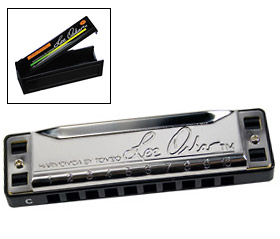
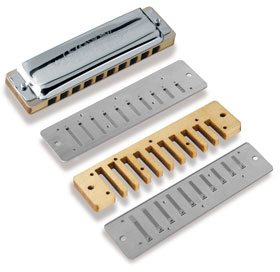
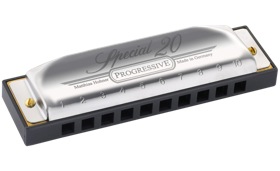
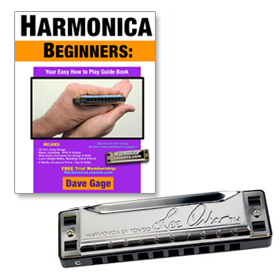
You can't go wrong with the Lee Oskar Major Diatonic or the Hohner Special 20 (preferably in the key of "C"), both are great for players just starting out. The Lee Oskar harmonicas also feature the 1st Position and 2nd Position keys printed on the ends for easy reference.
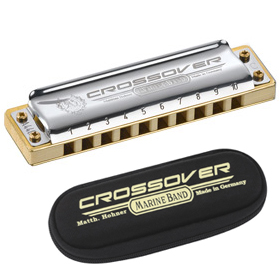
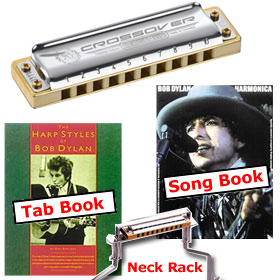
The Hohner Marine Band Crossover and the Suzuki Manji Diatonic and the Seydel 1847 Classic are also excellent choices—a bit more pricey, but great quality, tone, and playability with a wood comb. (Can't decide? Pick one, and try another when you need to buy different key.)
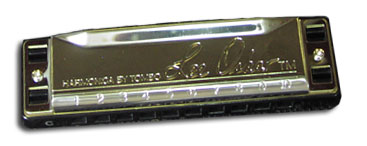
One recommended harmonica: Lee Oskar diatonic in the key of "C".
- Will my harmonica work with this site? Is my chromatic harmonica okay?- Visit the Recommended Harmonicas For Our Instruction page for lists of the 'Recommended', 'Acceptable', and 'NOT Recommended' models and brands. You can refer to this "Getting Started" section, General Overview, for more information on diatonic vs. chromatic harmonicas as well as some basic 1st and 2nd Position harmonica theory, and a "Chart of Harmonica Keys & Positions" for jamming to songs.
By the way, quick definitions of harmonica related terms like "diatonic", "chromatic", and "key" can be found in the Terms & Definitions section. For Chromatic Harmonica Instruction, Songs, and Information, visit the chromatic harmonica section of this website.
- Stick with a basic 10 hole harmonica in the key of "C"- Diatonic harmonicas come in all twelve keys (G, Ab, A, Bb, B, C, Db, D, Eb, E, F, F#), but for beginners it's easier if you start with a basic 10 hole harmonica in the key of "C" (generally speaking, the "G" harmonicas are very low and the "F" and "F#" harmonicas are very high pitch-wise, while the "C" is right in the middle). Key of "C" harmonicas are the most common, and they also make understanding music theory much easier.
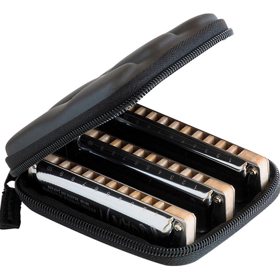
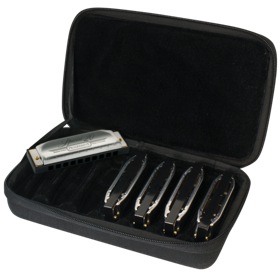
- Should I buy other key diatonic harmonicas as well?- As you improve and begin to play with others or start playing along with CDs, you will want to pick up some of the other key diatonics. The "C", "A", "D", "F", and "G" keys are a good place to start- in roughly that order. The key of harmonica you need is determined by the key the song is in and usually set by the singer. If you are not playing along with other people or with CDs, all you need is a key of "C" for now.
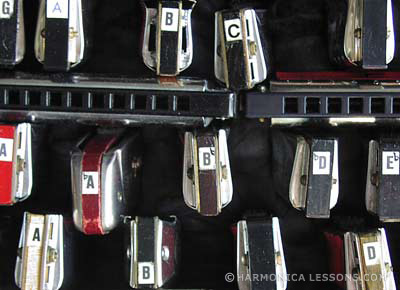
Pick up additional keys when you are ready to play
with others and jam with CDs.
- Will a key other than "C" work at this site?-You should note that all keys of standard diatonic harmonicas are layed out and played the same way. That is, if you already own a standard 10-hole diatonic in a key other than the key of "C" (like an "A" or "D" for instance), it will work for the instruction and songs on this site. But, make the key of "C" your next purchase.
- A cheap harmonica is tough to learn on- Prices may vary, but it is best to buy a diatonic harmonica for no less than $35 to $60, because a cheap harmonica can be extremely difficult to learn on. Poor construction of inexpensive harmonicas causes them to leak air and makes them hard to play and difficult to learn important techniques like bending.
- Avoid these diatonics, and possibly "upgrade"- Avoid inexpensive wood combed harmonicas if you are just starting out for the same air leak problems mentioned above. (The Hohner Marine Band Crossover and the Suzuki Manji Diatonic and the Seydel 1847 Classic are quality wood combed diatonics we do recommend.) The "free" harmonicas that are included with less expensive book and harmonica packages are not recommended either. These are very inexpensive harmonicas that are included in the package for convenience, but are typically of low quality. If you have any serious intentions at all with the harmonica, you should upgrade to a better harmonica.
- Should I buy a used one?- This is entirely up to you. But, we don't recommend it for obvious health reasons, and the fact that a brand new pro quality diatonic is between $35 and $60. Also, harmonicas do wear out over time. It's best to start with one that you know is in good condition and plays in tune.
- The Chromatic Harmonica is not appropriate for all of the instruction/tabs at this site- Much of the instruction and information at Harmonics Lessons.com is geared towards diatonic harmonica, but a lot of the techniques and theory are applicable for both diatonic and chromatic harmonicas. For Chromatic Instruction, songs, and information, visit the chromatic harmonica section of this website.
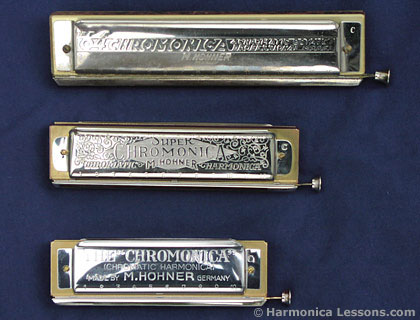
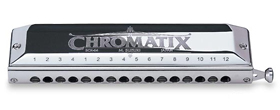
10, 12, and 16-hole chromatic harmonicas (harps).
- Tremolo and "odd" harmonicas won't work with the instruction here- Double-row harmonicas (sometimes 8, 10, 12, or more sets of double holes) are called Tremolo harmonicas and will not work well with the instruction at this site. Visit this page, "Recommended Harmonicas For Our Instruction", for lists of the Recommended, Acceptable, and NOT Recommended models and brands.
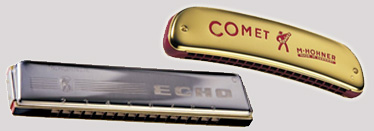
Common double-row Tremolo type harmonicas.

Now that you have the correct harmonica, it's time for some quick Quick Start Tips to get you moving. There is a ton of detailed information on techniques and playing theory to be found on this site, but these beginning tips will get you started right away.